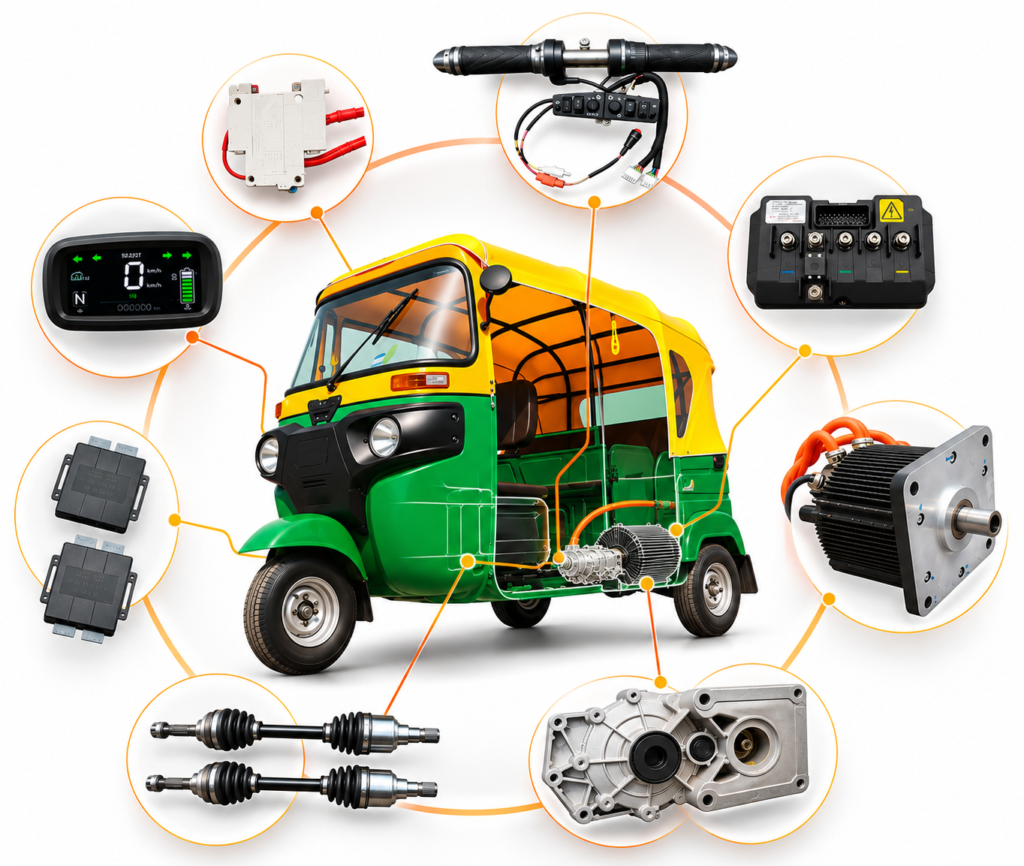
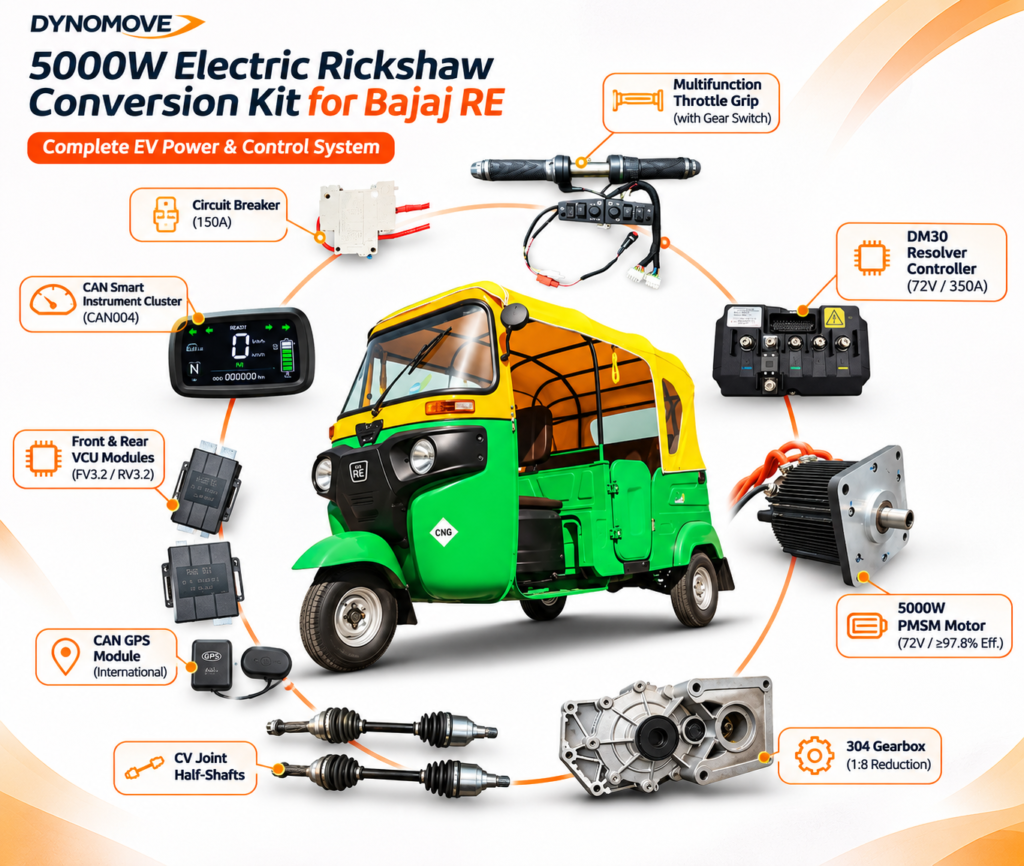
For commercial Tuk Tuk operators, fuel costs, maintenance expenses, and vehicle downtime directly affect daily earnings.
Converting an existing fuel-powered Tuk Tuk into an electric vehicle offers another way to reduce operating costs while continuing to use much of the original vehicle structure.
However, for importers, local conversion companies, and fleet operators, the decision comes down to three practical questions:
- Operating Savings: How much can electric conversion reduce annual operating costs?
- Conversion Investment: How much does a complete electric conversion system cost?
- Payback Period: How long will it take to recover the initial investment?
This article examines these questions using commercial operating scenarios and market research estimates.
1. Lower Operating Costs Are the Main Reason to Consider Tuk Tuk Electric Conversion
Tuk Tuks are widely used for short-distance passenger transport. Unlike private vehicles, commercial three-wheelers often operate for long hours and cover considerable distances every day.
For vehicles such as the Bajaj RE, our market research uses the following operating conditions as reference points:
| Operating Parameter | Reference Range |
|---|---|
| Daily Distance | 80–140 km |
| Daily Operating Hours | 8–14 hours |
| Fuel Economy | 28–35 km/L |
| Typical Cruising Speed | 35–45 km/h |
| Passenger Capacity | Driver + 3 passengers |
Fuel is only one part of the operating cost. Conventional Tuk Tuks also require engine oil, filters, clutch maintenance, and repairs to the engine and transmission system.
Electric conversion can reduce some of these expenses by replacing the fuel-powered drivetrain. However, electric vehicles introduce other costs, including battery maintenance and electrical system repairs.
The financial value of electric conversion should therefore be measured by total operating costs, not just the difference between fuel and electricity prices.
2. How Much Can Electric Conversion Save?
To illustrate the potential cost difference, we use an operating cost model developed during our earlier research into Bajaj RE commercial operations in India.
Fuel prices, electricity rates, maintenance expenses, and daily mileage vary between countries. The following figures are research estimates for this example, not verified operating averages for India or other markets.
Annual Operating Cost Comparison
| Annual Cost | Fuel-Powered Tuk Tuk | Electric Conversion |
|---|---|---|
| Energy | $1,540 | $270 |
| Maintenance & Repairs | $670 | $220 |
| Downtime Losses | $120 | $45 |
| Total Annual Cost | $2,330 | $535 |
Source: Earlier market research cost model for Bajaj RE operations in India. Figures are estimates in USD, not actual fleet operating records.
Based on this model:
- Annual operating cost savings: $1,795
- Estimated operating cost reduction: Approximately 77%
This suggests that electric conversion could significantly reduce daily operating expenses under the assumed conditions.
However, these figures do not include the initial conversion investment, future battery replacement, or financing costs. The 77% reduction refers only to the annual operating costs included in this model, not the vehicle’s total lifetime cost.
For importers and conversion companies, the same calculation should be repeated using actual fuel prices, electricity rates, and operating conditions in their target markets.
3. How Much Does a Tuk Tuk Electric Conversion Cost?
The cost of converting a Tuk Tuk depends on the components included, battery specifications, and local installation requirements.
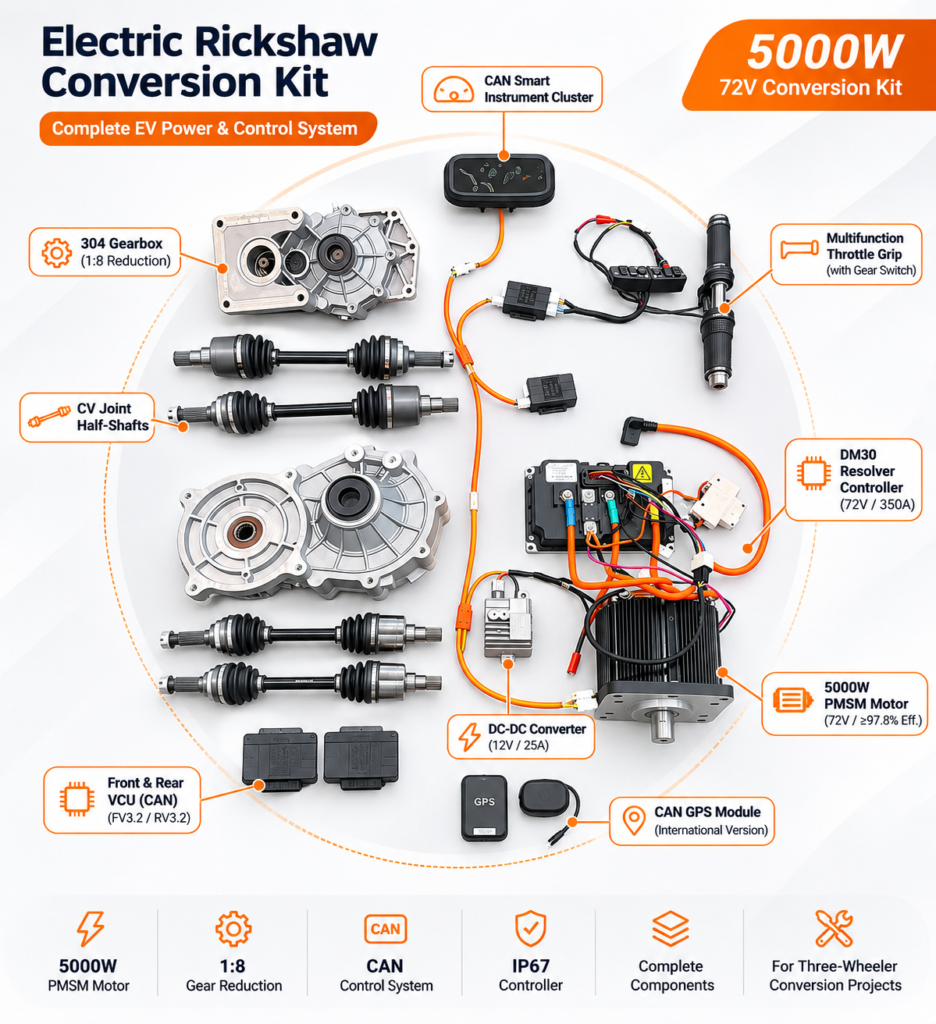
Purchasing a motor and controller is very different from buying a complete conversion system with a battery, mounting components, and supporting electrical equipment.
Based on our earlier market research, the following price ranges provide a reference:
| Conversion Package | Reference Price |
|---|---|
| Motor + Controller | $400–800 |
| Basic Electric Drive System | $800–1,500 |
| Complete Conversion Kit Without Battery (FOB) | $1,500–2,500 |
| Complete Conversion Kit With Battery (FOB) | $2,200–4,000 |
| End-User Conversion Price | $3,000–6,000 |
These are historical market research estimates. Actual quotations depend on the supplier, specifications, order quantity, and destination market.
For importers planning commercial conversion projects, the kit price is only part of the total investment. Shipping, local installation, testing, and after-sales support must also be considered.
Controlling the Final Conversion Cost
Our earlier research also identified the following target cost structure for a commercially competitive conversion solution:
| Cost Item | Target Price |
|---|---|
| Factory BOM Cost in China | $1,200–1,500 |
| China FOB Price | $1,700–1,900 |
| Target End-User Conversion Price | $2,800–3,000 |
These figures represent development and pricing targets, not confirmed transaction prices.
For commercial operators, the conversion price needs to be balanced against the operating savings it can generate.
Even a technically capable conversion system may be difficult to sell if its initial cost results in an excessively long payback period.
4. How Long Does It Take to Recover the Conversion Investment?
The payback period is one of the most important financial indicators for a commercial Tuk Tuk conversion project.
A simple payback period can be calculated as:
Payback Period = Total Conversion Investment ÷ Annual Operating Cost Savings
Using the earlier India-based operating cost example and the target conversion price from our research:
Estimated Payback Period
| Calculation Item | Reference Value |
|---|---|
| Target End-User Conversion Cost | $2,800 |
| Annual Fuel Vehicle Operating Cost | $2,330 |
| Annual Electric Vehicle Operating Cost | $535 |
| Annual Operating Cost Savings | $1,795 |
| Simple Payback Period | Approximately 18.7 months |
If the final conversion cost increases to $3,000, the estimated simple payback period becomes approximately 20.1 months.
Under these assumptions, the conversion investment could be recovered through operating cost savings in roughly 19–20 months.
This is a simplified estimate. It does not account for future battery replacement, financing costs, or other additional expenses.
What Affects the Payback Period?
Three factors have the greatest influence:
- Daily Mileage: Higher vehicle utilization generally creates more opportunities for energy cost savings.
- Local Energy Prices: A larger difference between fuel and electricity costs can improve the economics of conversion.
- Conversion and Battery Costs: Higher initial investment or earlier battery replacement can extend the actual payback period.
Because these conditions vary between markets, a payback estimate calculated for one country should not be applied directly to another.
Importers and fleet operators should evaluate conversion economics using their own local operating data.
5. Long-Term Reliability Matters as Much as Initial Savings
Lower operating costs and a reasonable payback period are important, but they are not the only factors behind a successful commercial conversion project.
Commercial Tuk Tuks may operate for many hours each day. Unexpected breakdowns can lead to repair expenses, lost working time, and reduced driver income.
When selecting an electric conversion system, three areas deserve particular attention.
Reliable Core Components
Motors, controllers, batteries, and drivetrain components must be suitable for commercial operating conditions.
Battery life is especially important because replacement costs can affect the long-term financial performance of the vehicle.
Standardized Installation
For companies planning to convert multiple vehicles, standardized mounting brackets, wiring harnesses, installation instructions, and testing procedures can improve installation efficiency and consistency.
Spare Parts and Technical Support
Clear maintenance instructions, fault diagnosis, and reliable spare parts availability help local conversion companies manage repairs and support their customers.
For importers, choosing a conversion kit supplier means evaluating more than the purchase price. Installation efficiency, component reliability, and after-sales support all affect the long-term value of the project.
Conclusion: Is Tuk Tuk Electric Conversion Worth the Investment?
Electric conversion offers a practical option for extending the use of existing fuel-powered Tuk Tuks, particularly in markets with high vehicle utilization and significant fuel expenses.
Our research model shows that electric conversion has the potential to reduce annual operating costs. However, the actual financial return depends on local energy prices, conversion investment, vehicle usage, and battery life.
Before starting a commercial conversion project, importers and local partners should evaluate three questions:
- Operating Economics: How much can the converted vehicle save under local operating conditions?
- Investment Recovery: Can the conversion investment be recovered within the vehicle’s remaining useful life?
- Long-Term Operation: Can the system be installed consistently and supported with reliable spare parts and technical service?
Local vehicle modification, registration, and commercial operating requirements should also be confirmed before implementation.
A commercially successful Tuk Tuk electric conversion solution must do more than reduce energy costs. It needs to deliver reliable operation and a reasonable return on investment.
Explore Tuk Tuk Electric Conversion Solutions
Dynomove provides electric conversion solutions for Tuk Tuk applications, including Bajaj RE.
Contact our team to discuss your target vehicle, technical requirements, and available conversion configurations.
Explore Related Electric Rickshaw Solutions
Whether you’re planning to convert existing fuel-powered Tuk Tuks or expand your fleet with new electric vehicles, Dynomove offers solutions for different business needs. Explore our electric conversion kits and passenger rickshaws to find the right option for your market.